How Digital Menu Boards Became Essential in Quick-Service Restaurants
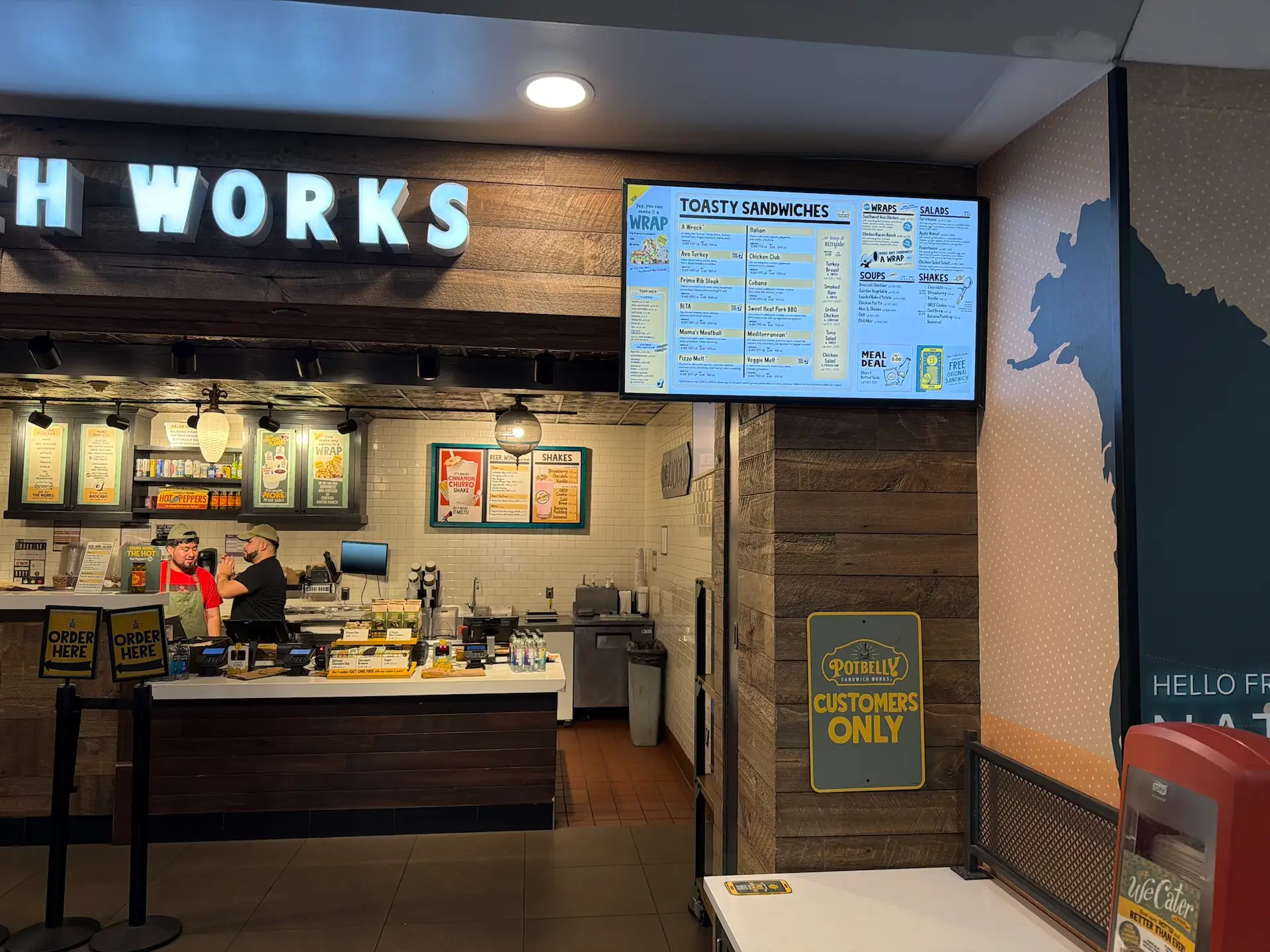
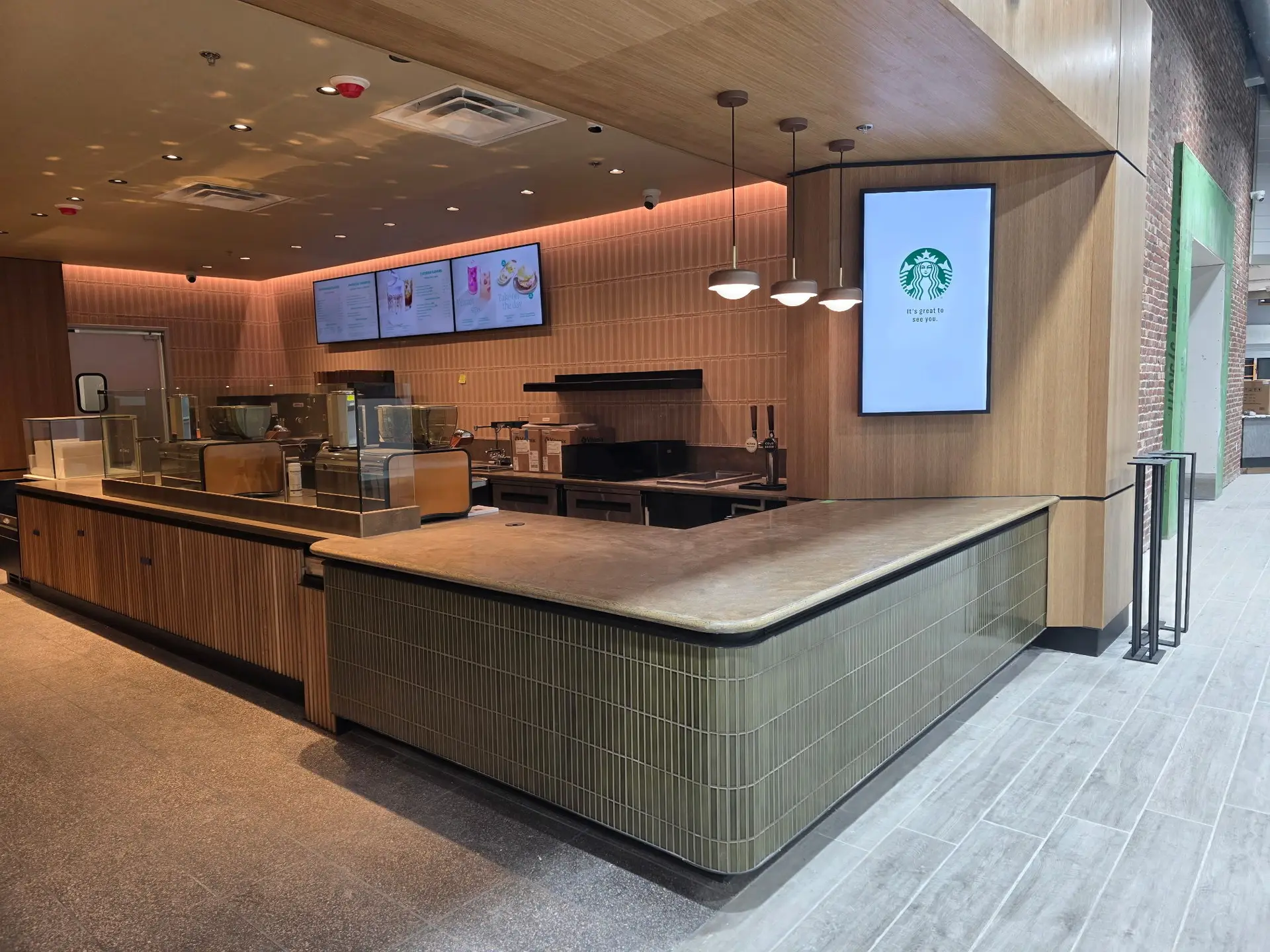
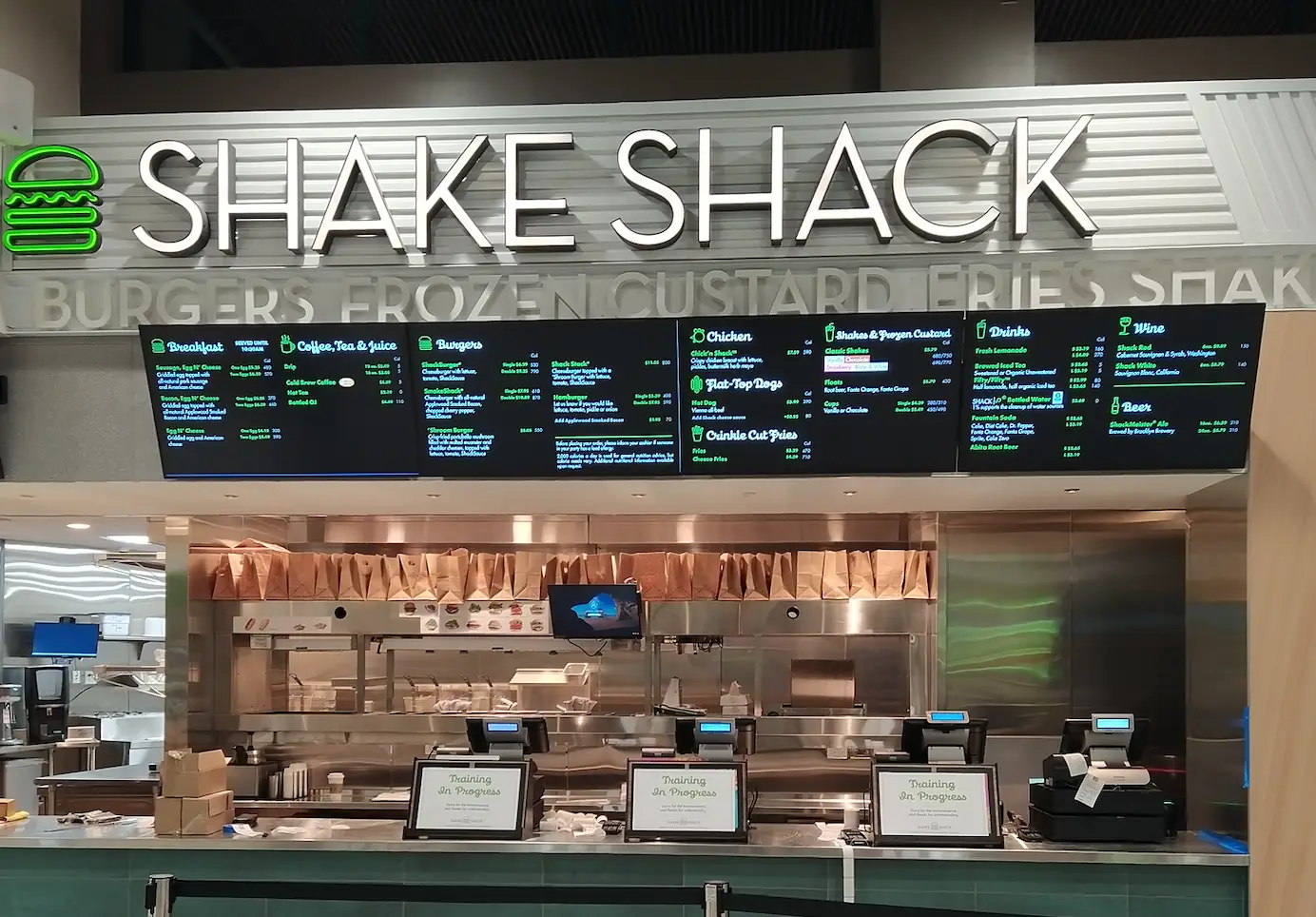
As technology continues to reshape the foodservice industry, digital menu boards have become the standard in quick-service restaurants (QSRs). Their efficiency, modern design, and seamless content updating capabilities make them indispensable for operators competing in a fast-paced market. One of the most significant recent developments has been the integration of artificial intelligence into digital menu systems. When McDonald’s acquired Dynamic Yield in 2019, it signaled a major shift toward data-driven menu personalization. Factors such as weather conditions, time of day, and trending menu items now inform real-time menu content, revolutionizing customer interaction and driving measurable sales increases across the industry.
Drive-Thru Modernization and AI-Integrated Displays
The post-COVID landscape accelerated the need for enhanced off-premise dining experiences, pushing fast-food leaders like McDonald’s, Burger King, and Taco Bell to modernize their drive-thru lanes with larger, AI-integrated digital displays. KFC’s development of triple-lane digital menu boards is emblematic of this industry-wide transformation. These drive-thru digital menu board solutions allow restaurants to display dynamic content that adapts to traffic patterns, dayparts, and promotional strategies — all without requiring a crew member to manually swap signage. The result is faster service, higher average check totals, and a more engaging customer experience at the order point.
Sustainability and Green Digital Signage Technology
Sustainability is another trend reshaping QSR signage strategies. A noteworthy example is the partnership between White Castle, Coca-Cola, and E Ink, which aims to promote green technology by using low-power, solar-capable color-changing e-paper in digital menu displays. As restaurants face growing pressure to reduce energy consumption and environmental impact, innovations like these demonstrate that digital menu boards can align with corporate sustainability goals while still delivering vibrant, attention-grabbing content.
Cloud-Based Systems and Personalized Customer Experiences
Cloud-based digital menu board platforms are now being deployed to strengthen digital advertising strategies, reduce marketing launch timelines, and ensure brand consistency across hundreds or thousands of locations. Solutions like Amazon Signage CMS-powered menu boards allow operators to manage content remotely and push updates enterprise-wide in seconds. In parallel, AI is enabling a more personalized customer experience at scale. Companies like Presto have pioneered AI-driven ordering, and Sonic Drive-In has demonstrated how intelligent menu displays can tailor suggestions based on individual ordering behavior and contextual data.
The rise of contactless payments has further accelerated the adoption of cashierless systems that rely on digital menu boards for self-service ordering. Voice-based ordering platforms combined with digital displays deliver smooth, autonomous customer experiences. When paired with real-time POS integrations, these systems can automatically sync menu availability, pricing, and promotions without manual intervention.
Future-Proof Your Restaurant with Menu Board Manager
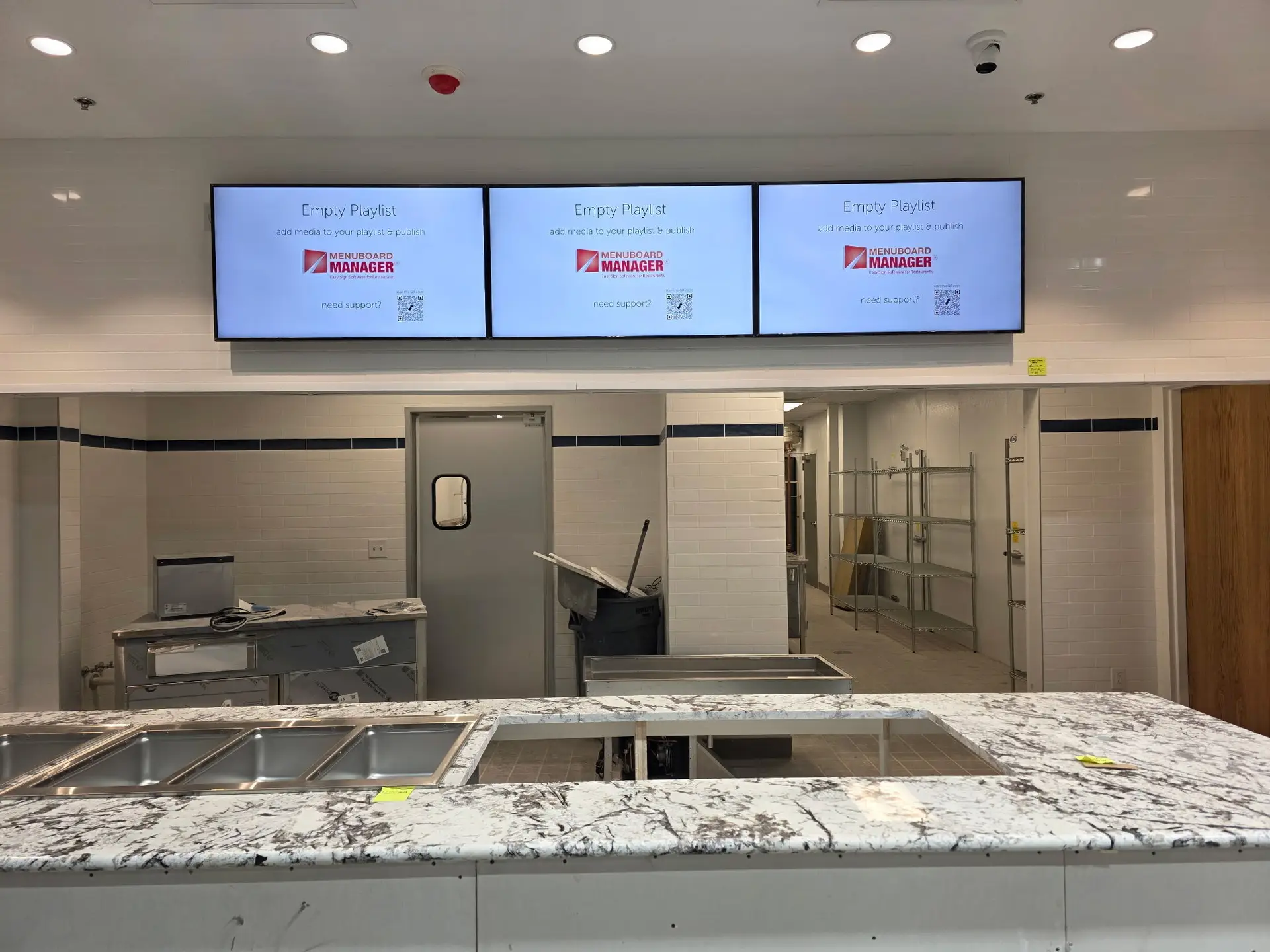
The evolution of digital menu boards in quick-service restaurants shows no signs of slowing down. From AI-powered personalization and cloud-based management to sustainable signage technology and comprehensive self-service experiences, the industry is moving toward smarter, more connected dining environments. Menu Board Manager specializes in designing, installing, and managing digital menu board systems that help QSRs stay ahead of these trends. Whether you need drive-thru solutions, cloud-managed displays, or POS-integrated menu boards, our team is ready to help.
Contact Menu Board Manager today to learn how we can modernize your restaurant’s menu experience and position your brand for the future of quick-service dining.