System-on-Chip vs. Media Players: Which Is Right for Your Digital Signage?
Choosing the right hardware architecture is one of the most important decisions when deploying digital menu boards or digital signage. The two primary options are monitors with built-in System-on-Chip (SoC) processors and standalone external media players. Each approach has distinct strengths, and understanding the trade-offs will help you invest wisely. Below, Menu Board Manager breaks down the key advantages of SoC-powered displays and explains when they make the most sense for restaurants, retail stores, corporate offices, and hospitality venues.
What Is System-on-Chip Technology in Digital Signage?
A System-on-Chip display integrates the media player directly into the monitor’s motherboard. Instead of connecting a separate device such as a BrightSign player or an Amazon Fire TV stick, the screen itself runs your digital signage software. Leading commercial display manufacturers like Samsung and LG ship SoC-enabled panels that can connect to a content management system right out of the box. This architecture reduces component count and simplifies the entire signage ecosystem.
Cost Savings and Simplified Installation
One of the most compelling reasons businesses choose SoC monitors is cost-effectiveness. Eliminating a standalone media player removes an entire line item from your hardware budget and cuts ongoing maintenance expenses because there is one less device to troubleshoot, power, and replace. Installation becomes significantly easier as well. Without external players, there is no need for additional HDMI cables, power adapters, or mounting brackets behind each screen. The result is a faster, cleaner deployment, which is especially valuable in multi-location rollouts where technician time adds up quickly. If you want to understand the full financial impact of switching to digital displays, the digital menu board ROI calculator can help you compare costs and estimate your payback period.
Space-Saving Design, Reliability, and Smarter Content Management
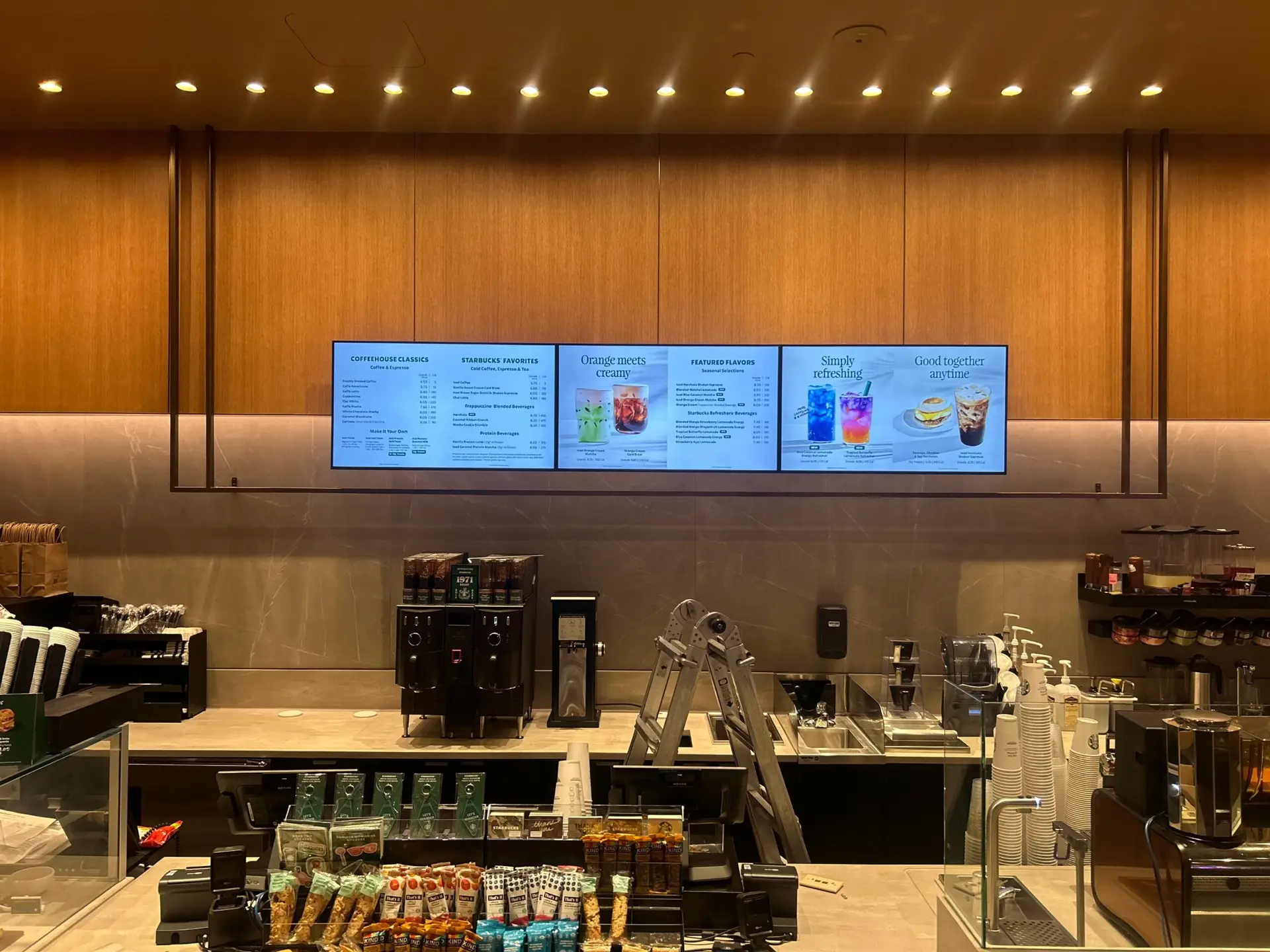
In space-constrained environments such as drive-thru windows, behind-counter menu board walls, and compact retail kiosks, every inch matters. An SoC display delivers a sleek, clutter-free installation with no external box to hide or secure. Reliability also improves because there are fewer points of failure. With a traditional setup, a loose HDMI connection or a media player crash can take an entire screen offline. An integrated SoC eliminates those risks, ensuring more consistent uptime and uninterrupted content playback for your customers.
Modern SoC displays support cloud-based content management platforms, making it easy to schedule dayparts, update pricing, and push promotions across every screen from a single dashboard. Many SoC panels work seamlessly with the same software used by external media players, so you are not sacrificing functionality for simplicity. For restaurants that need real-time menu updates driven by inventory, pairing an SoC display with a POS integration enables automatic 86 management, ensuring sold-out items disappear from the board the moment your kitchen runs out.
When External Media Players Still Make Sense
SoC technology is not the ideal fit for every scenario. External media players can offer more processing power for complex video walls, interactive content, or signage that requires advanced integrations beyond what a built-in chip can handle. They also allow you to upgrade playback hardware without replacing an entire display. The best approach depends on your content complexity, budget, and long-term scalability goals.
Menu Board Manager helps businesses nationwide select, install, and manage the right digital signage hardware, whether that means SoC-powered commercial displays, external media players, or a hybrid approach tailored to your environment. Our team will assess your requirements and recommend the most cost-effective, reliable solution for your operation. Contact us today to get expert guidance and start building a signage system that works for your business.