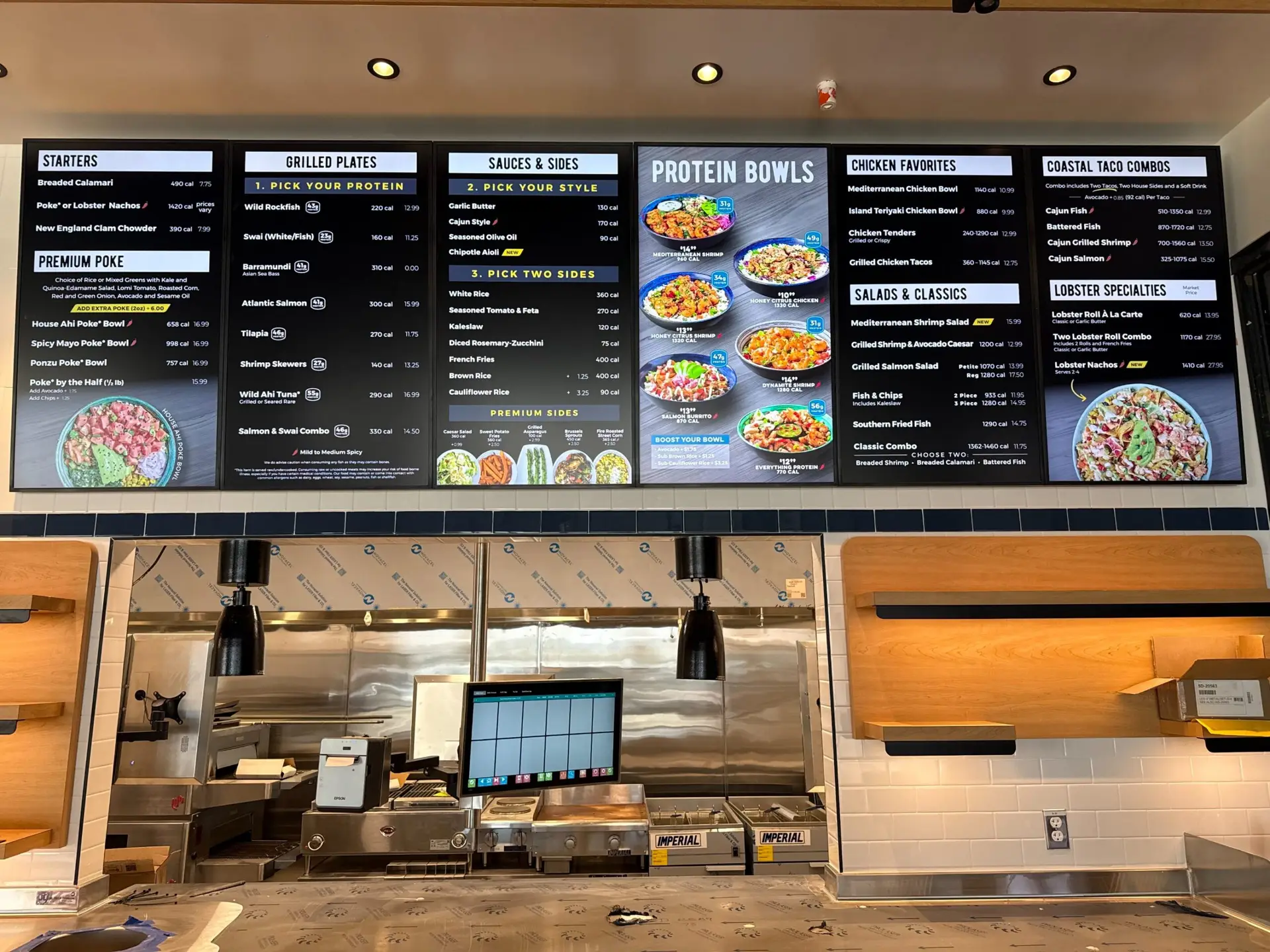
Where Every Second Counts: Starbucks at Orlando International Airport
Orlando International Airport (MCO) ranks among the busiest airports in the United States, welcoming tens of millions of passengers each year. Inside its terminals, travelers move quickly — scanning departure screens, navigating concourses, and making split-second decisions about where to grab a coffee before boarding. For the Starbucks location operating within this high-velocity environment, there is no margin for menu confusion, outdated pricing, or inconsistent brand presentation. The digital menu boards behind the counter need to perform flawlessly, every hour of every day.
The Unique Demands of an Airport Starbucks
Running a Starbucks inside a major international airport is a fundamentally different operation than running one on a suburban street corner. Customer dwell time is compressed. The audience is global, diverse, and unfamiliar with the specific location. Seasonal and limited-time-offer (LTO) promotions must appear on schedule and disappear just as precisely. And above all, the Starbucks brand — one of the most recognizable in the world — demands visual consistency down to the pixel. Menus must reflect current offerings accurately, pricing must be correct, and the overall aesthetic must align with corporate brand standards at all times.
These requirements create a unique set of digital signage challenges. Content updates need to happen remotely and reliably, without requiring on-site technical intervention. Displays must remain operational through long operating hours and constant foot traffic. And the underlying platform must be stable enough that operators can trust it to run without daily oversight.
A Cloud-Based Platform Built for Reliability
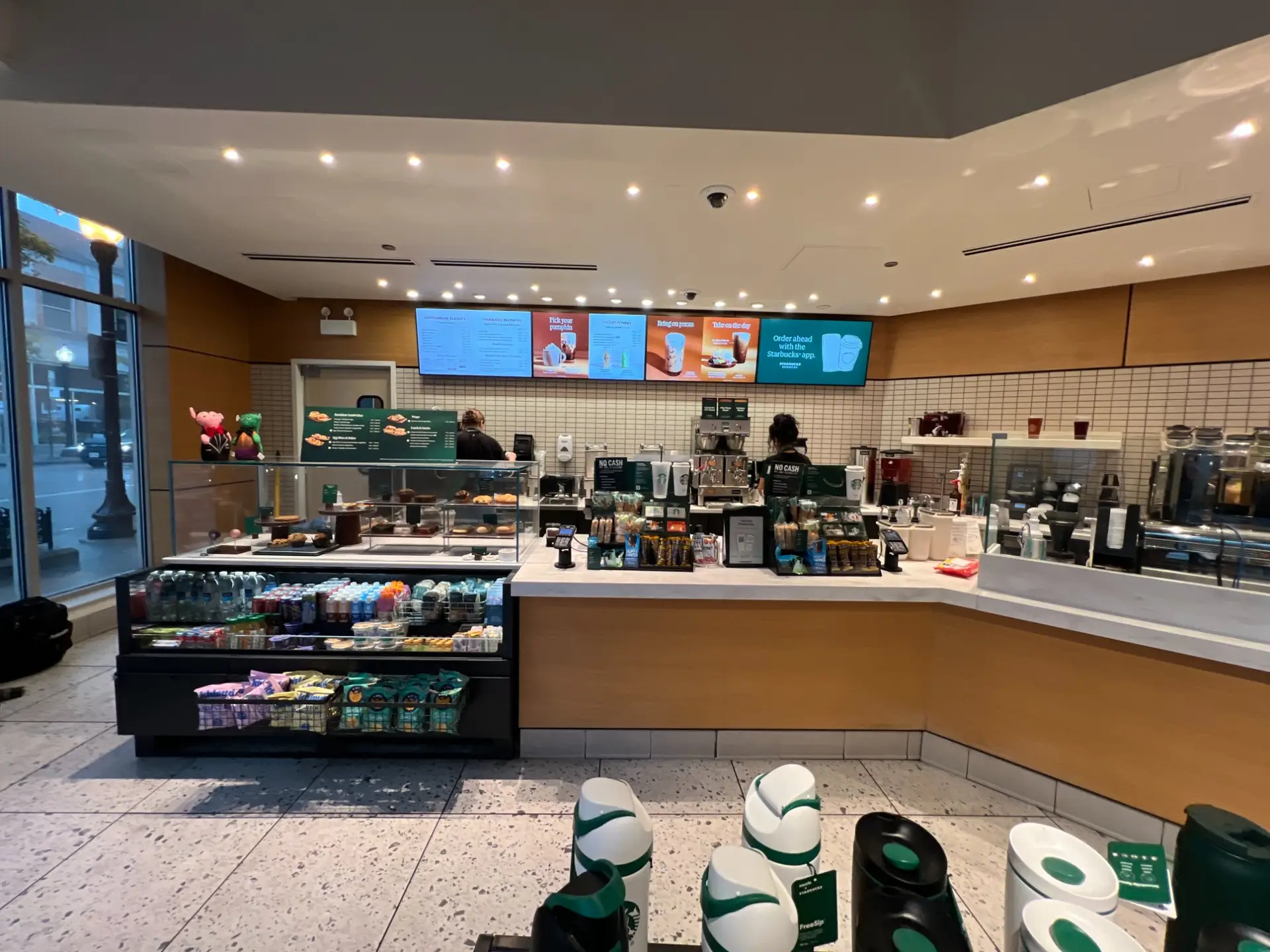
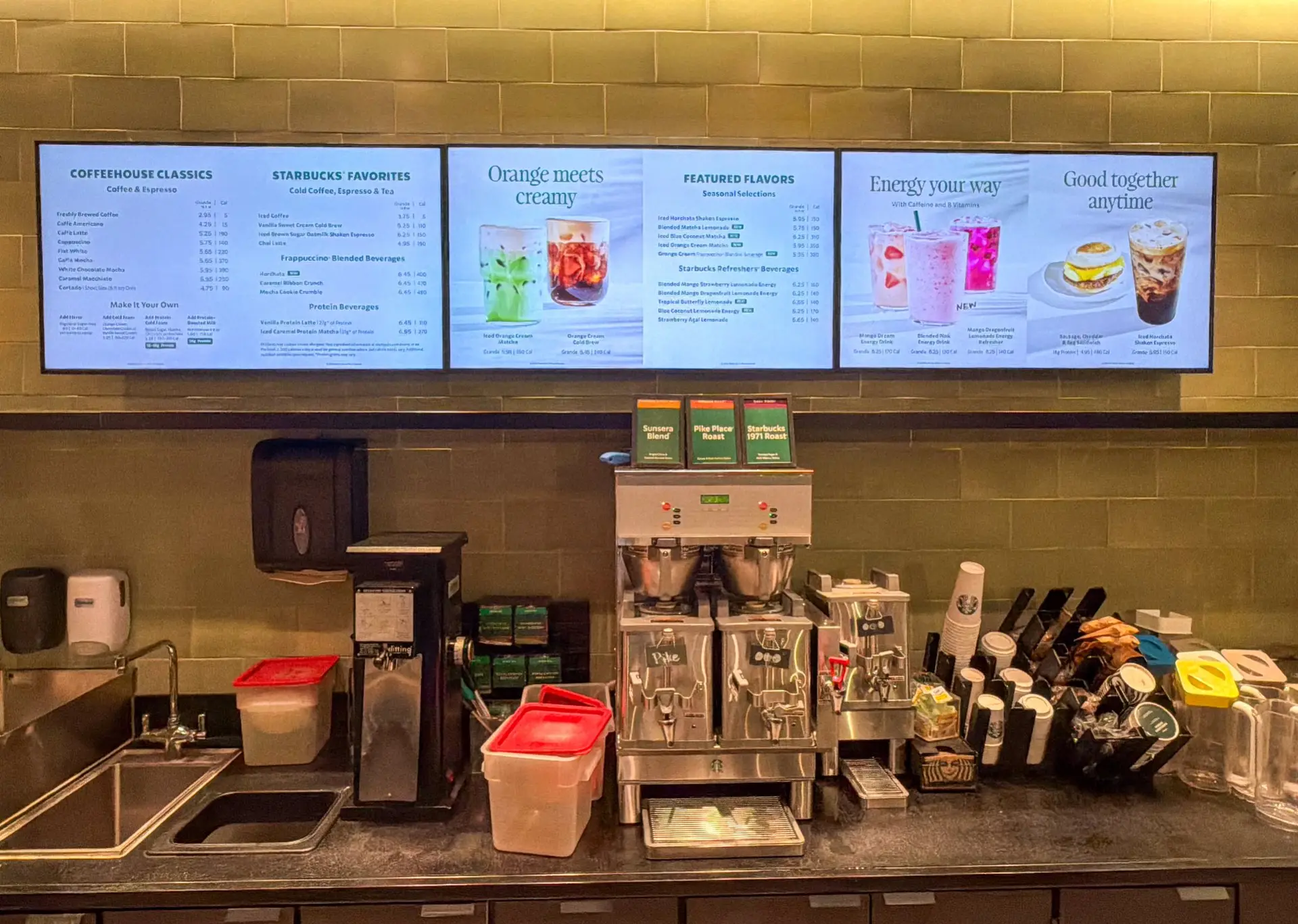
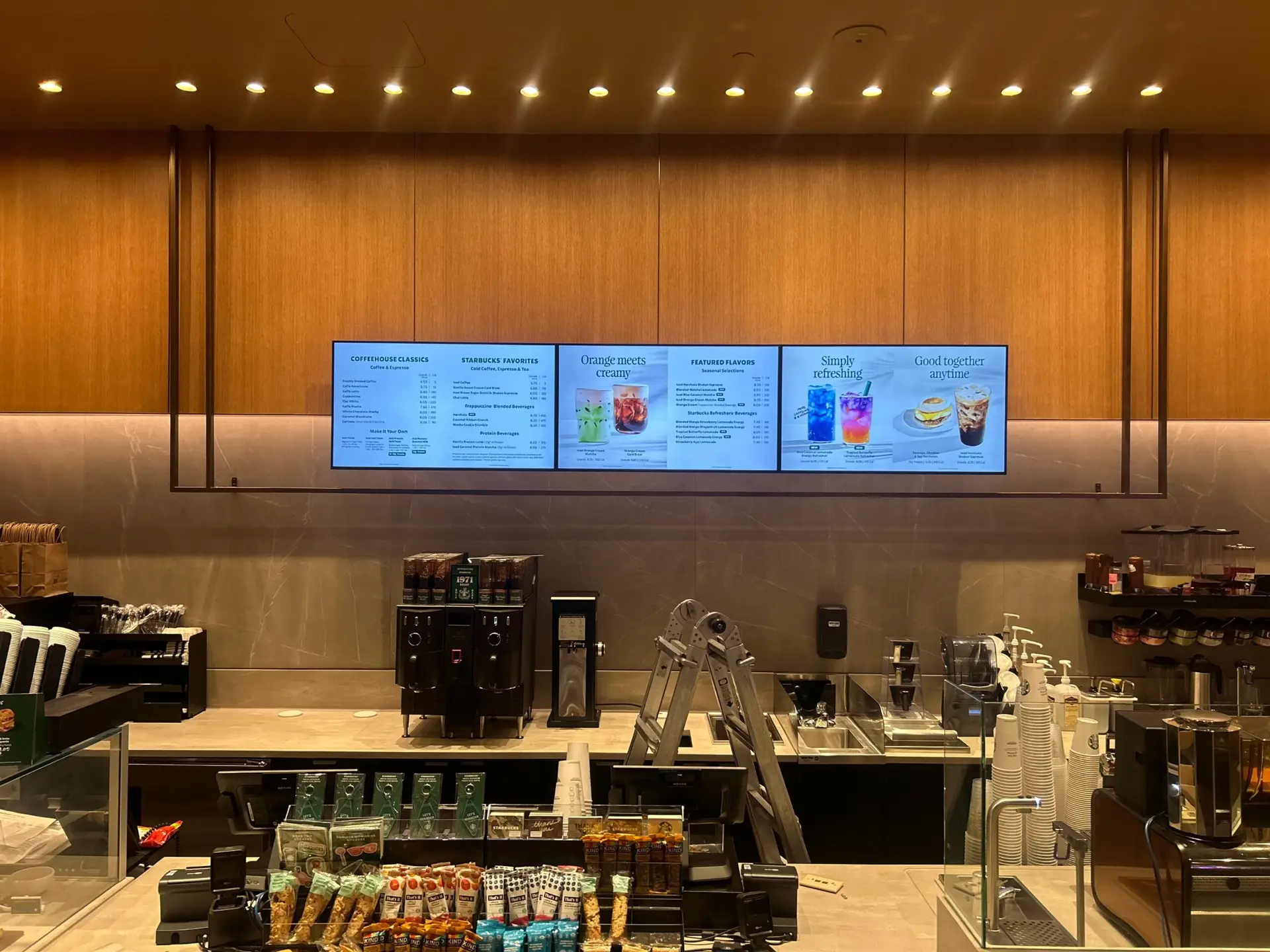
The Starbucks at MCO has relied on Menu Board Manager — a cloud-based digital menu board platform developed by OSM Solutions — for over four years. The deployment runs on Samsung commercial-grade displays, chosen for their durability, brightness, and suitability for high-ambient-light environments like airport concourses.
Through Menu Board Manager, operators can push menu content updates from any location with an internet connection. Whether the update involves a new seasonal beverage launch, a price adjustment, or the removal of an out-of-stock item, changes propagate to the screens quickly and accurately. This cloud-managed approach to digital signage eliminates the need for USB drives, on-site computers, or manual screen-by-screen updates — a critical advantage when the location operates inside a secured airport terminal where access can be restricted.
For a brand like Starbucks, where menu board content and design must meet exacting visual standards, the platform provides the control and precision necessary to maintain brand compliance without adding operational complexity. Every screen displays exactly what it should, when it should.
Four Years and Counting: What Longevity Says About a Platform
In the digital signage industry, longevity speaks louder than any sales pitch. The fact that this Starbucks location has continuously operated on Menu Board Manager for more than four years reflects a level of platform dependability and operator confidence that is difficult to achieve. Airport food and beverage operators deal with enough logistical complexity — from staffing and supply chain to regulatory compliance. A digital menu board system that simply works, year after year, removes one variable from an already demanding equation.
This kind of sustained deployment also validates the durability of the Samsung commercial display hardware paired with the platform. In an environment where screens run for extended hours under fluorescent and natural lighting, reliable hardware performance is just as important as reliable software.
The Future of Digital Menu Boards in Travel Environments
As airports, train stations, and travel plazas continue to modernize their food and beverage offerings, dependable digital menu board technology is quickly becoming essential infrastructure rather than a nice-to-have upgrade. Branded operators need platforms that can maintain consistency across multiple locations, respond to real-time operational changes, and deliver the visual quality that today’s consumers expect. The Starbucks deployment at MCO demonstrates what that looks like in practice — not as a short-term pilot, but as a long-term operational standard.
Bring This Level of Reliability to Your Location
Whether you operate a single location inside an airport terminal or manage branded food and beverage concepts across multiple venues, Menu Board Manager provides the cloud-based control, visual precision, and proven reliability your operation demands. To learn how we can support your digital menu board deployment, get in touch with our team today.